
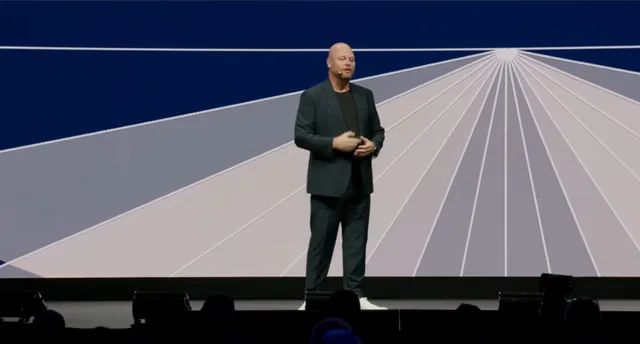
Clio CEO, Jack Newton’s keynote at ClioCon this year covered a wide range of items, including Clio’s expansion into the enterprise market, the transformative investment in AI through the vLex acquisition, and the convergence of law and the business of law through Clio Work.
But what hit home for me was Jack's discussion on unlocking the latent legal market through the effective use of AI.
I’ve heard Jack speak about the access to justice gap for years. Increasing access to legal services is in Jack’s DNA and in Clio’s mission, “...transforming the legal experience for all.”
I’m right there with Jack and Clio. For close to thirty years, I’ve worked to help lawyers use the Internet to share what they know with the public so they can be seen, be accessible, and be trusted.
So when Jack discussed the latent legal market and access to justice in his keynote nothing could have been more inspiring for me. It felt like the next chapter in an ongoing effort to make legal help more accessible.
This time, though, AI may make possible what we've only aspired to in the past.
Magnitude of the Latent Legal Market
Jack pointed to research from the World Justice Project making clear most legal problems never make it to a lawyer.
77% of people and businesses who experience a legal issue do not get legal help from a lawyer--whether because they can’t afford it, don’t know where to turn, or assume the system is too difficult to navigate. Only 23% of legal needs actually reach the legal market. And that 23% alone is already a $1 trillion-a-year industry.
So what happens if lawyers are able to serve even a portion of the remaining 77%?
That is the latent legal market. It’s not hypothetical demand. It’s real people with real legal needs who simply aren’t receiving help today. A market lawyers have yet to reach.
AI as an Amplifier, Not a Replacement in Reaching the Latent Market
Jack’s message was clear: AI isn’t here to replace lawyers. It’s here to amplify them.
- Amplify capacity.
- Amplify reach.
- Amplify the ability to deliver quality work faster.
If lawyers can do high quality work in less time, the cost of legal services can come down. And when the cost comes down, access goes up. And when access goes up, the market expands.
This is where Clio’s AI work and its acquisition of vLex matter. By grounding AI in the law itself, Clio is ensuring AI doesn’t replace lawyers but amplifies them.
Market Expansion With AI and Why It Matters
Jack put it succinctly:
"It's an opportunity for four times the clients to walk through your doors, four times the matters being opened, four times the revenue flowing into your firm. And importantly, in realizing this market opportunity, we will be addressing the access to justice gap."
This is not technology for technology’s sake. This is making a difference.
When legal help becomes more affordable and more visible:
- Lawyers benefit
- People and businesses benefit
- The justice system strengthens
Everyone advances.
Primary and Secondary Law: The Foundation of Reliable Legal AI
None of this happens unless the AI itself is trustworthy. Jack was direct that AI can only amplify lawyers if AI is grounded in the actual law, not just general Internet text, as you’re apt to find on ChatGPT, Gemini or Claude.
Jack pointed to the Clio Library (built over 25 years through vLex and Fastcase), which now includes over one billion legal documents from 110 countries. This library, in addition to primary law of statutes, regulations and cases includes secondary law—the commentary and analysis that gives context and judgment to the law.
This primary and secondary law turns AI from generic intelligence into legal intelligence.
Why this resonates with me
Secondary law is what grounds AI in the actual interpretation and commentary of the law from legal practitioners, academics and other legal professionals. That insight is now shared 24 hours a day in legal blogs, client updates, and other legal commentary across the open web. Without this ongoing, real-world interpretation, AI can’t be trusted to help lawyers or the public. It would just be guessing.
For over twenty years, I’ve believed that when lawyers share what they know in blog posts, articles and commentary they are helping more than just the reader of that day. They are contributing to the profession’s shared understanding of the law. They are helping both peers and the public.
This insight I have always viewed as secondary law, though acceptance as secondary has only come of late.
Now we see the benefits of this legal publishing.
-
- Makes legal knowledge more accessible
-
- Helps people find real guidance from real professionals
-
- And now plays a role in making AI useful instead of shallow
It turns out the everyday act of explaining the law is part of unlocking the latent legal market.
Not marketing. Not self-promotion. But service.
Service to the public. Service to peers. And service to the growing body of law.
And for LexBlog and I, this is publishing work worth supporting.


